
Your Resume is a Highlight Reel of What You Can Do Next
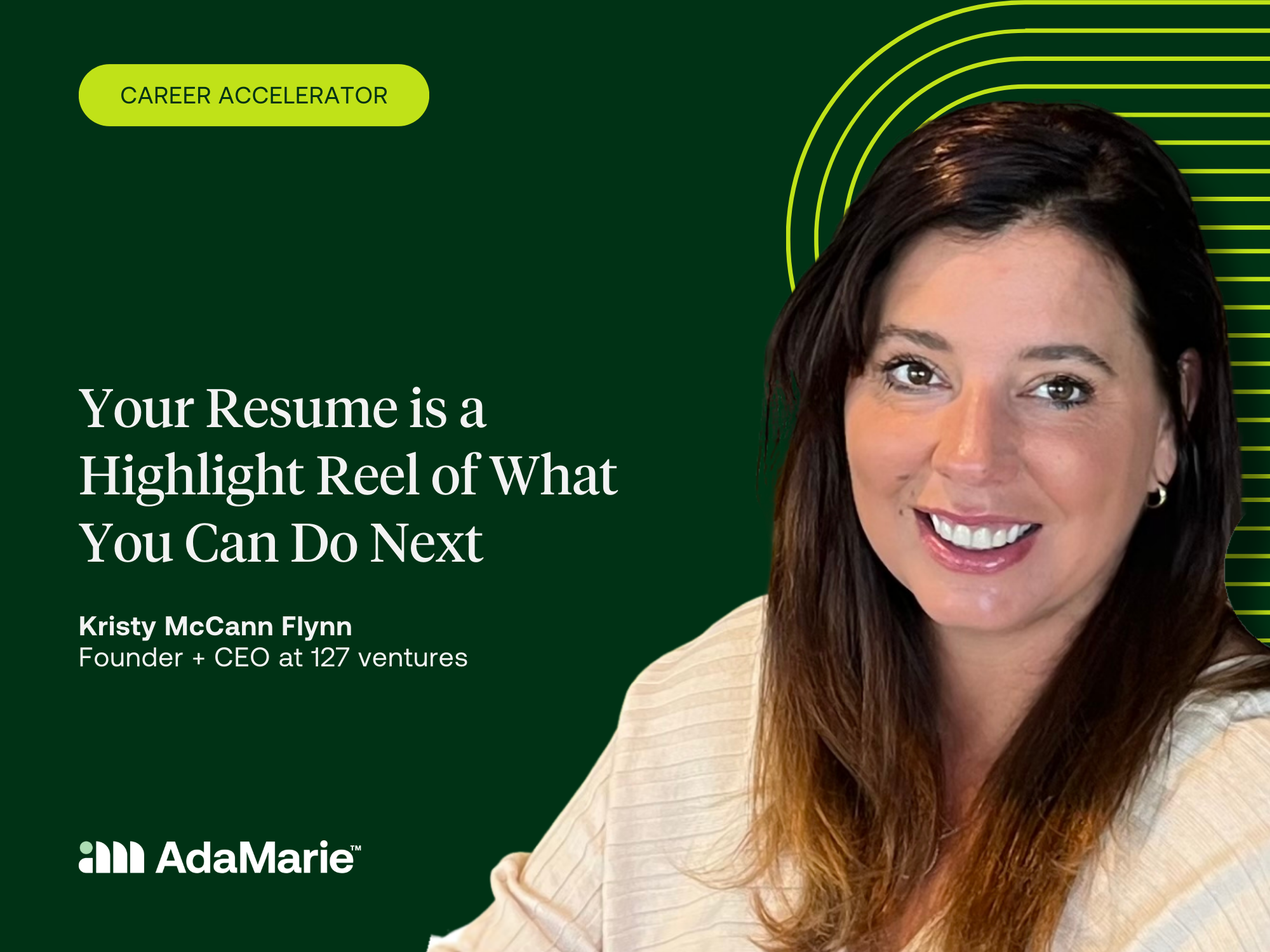
I've reviewed thousands of resumes in my 20+ years in HR. And I'm going to tell you something that might sting: most of them read like eulogies instead of launch pads.
Bullet points that say what you did instead of what you achieved. Job descriptions copied from the posting. A laundry list of responsibilities that tell me nothing about whether you can actually solve my problems. Here's the thing: your resume isn't a record of your past. It's a preview of your future.
And if you're early in your career, especially in STEM, you might be thinking, "But I don't have enough experience yet."
Wrong. You have exactly what you need. You just don't know how to show it yet.
Rule Number 1: Stop Listing. Start Proving.
Let's be real: nobody cares that you were "responsible for project management." Every resume says that. What I want to know is:
Did the project finish on time?
Did it come in under budget?
Did it solve the problem it was supposed to solve?
What would have happened if you *hadn't* done it?
Here's the difference:
❌ "Managed cross-functional team on software implementation project"
✅ "Led 5-person cross-functional team to deploy new CRM system 3 weeks ahead of schedule, reducing customer response time by 40% and eliminating 15 hours/week of manual data entry"
See what happened there? The second version tells me: You can lead people. You can manage timelines. You understand business impact. You measure outcomes.
That's the resume of someone who gets hired.
Rule Number 2: You Don't Need 10 Years to Show Impact.
I hear this all the time from early-career professionals: "I'm only 2months in, or 2 years in. I haven't done anything big yet."
Nope — get thinking. You've done plenty. You just haven't learned to see it as valuable yet. So, let me help. Did you:
Fix a broken process, even a small one?
Make something faster, cheaper, or better?
Teach someone something they didn't know?
Prevent a problem from happening?
Take on work that wasn't yours because no one else would?
That's impact. That's what goes on your resume.
And if you're thinking, "But that was just part of my job or I did that for free, or I helped a neighbor"—exactly. That's how you show you're good at your job. Not by listing what the job description said. By proving you actually moved the needle.
Rule number 3: Own Your Expertise (Even When It Feels Uncomfortable).
Here's where I see women and gender-diverse STEM professionals especially struggle: claiming credit for their own work.
You'll write "contributed to" when you should write "led."
You'll say "helped with" when you actually built the dang thing.
You'll use "we" when it was 90% you.
Stop it.
I know it feels gross. I know it feels like bragging. I know you were taught to be humble and collaborative and not make waves.
But here's what actually happens when you downplay your contributions: someone else takes credit. Or worse, no one notices you at all.
Your resume is not the place for false modesty. It's the place to tell the truth about what you're capable of. And if that makes you uncomfortable? Good. Growth lives in discomfort. And these key words will beat any ATS.
Oh, and please network your contributions, too! Build your network and allies!
Rule Number 4: Your Career Is Yours to Own, Not Theirs to Hand You.
The biggest mistake I see early-career professionals make is waiting for permission. Waiting for someone to notice them. Waiting for the "right time" to ask for what they want.
Meanwhile, the loud guy who started the same week as you just got promoted. Not because he's better. Because he asked.
Here's what owning your career actually looks like:
You update your resume every 6 months, not when you're desperate for a new job. You track your wins while they're fresh. You measure your impact before you forget the numbers. You build your portfolio of work constantly.
You know what you're worth, and you don't accept less than that. You research salary ranges. You talk to peers (yes, about money—get comfortable with it). You negotiate, even when it's terrifying.
You make your goals visible—to your manager, your team, yourself. You don't wait for your annual review to say "I want to grow into X role." You say it now. Out loud. Repeatedly.
You build skills on purpose, not by accident. You don't just take whatever training HR offers. You identify the gap between where you are and where you want to be, and you close it. Deliberately.
You leave when it's time to leave, and you don't feel guilty about it. If a company isn't investing in your growth, you don't owe them loyalty. You owe yourself a career that moves forward.
Rule Number 5: Your Resume Is Just the Start.
Look, I can teach you how to write a killer resume. I can show you how to quantify impact, how to position your experience, how to make a recruiter actually stop scrolling and beat any ATS out their controlled by AI.
But the resume is just the artifact. The real work is the mindset shift.
From "I'm not qualified yet" to "Here's what I've already proven I can do"
From "I hope they pick me" to "Here's why I'm the right fit—and here's what I need to succeed here"
From "I'm grateful for any opportunity" to "I'm strategic about the opportunities I accept"
That shift? That's what turns a resume from a piece of paper into a tool that opens doors.
What I Want You to Do Next
If you're already registered for the AdaMarie Career Accelerator, you're already doing the work. You're already investing in yourself. You're already choosing growth over comfort. So here's your assignment:
Pull up your current resume right now. Find one bullet point that's just a description of what you did. Now rewrite it to show the outcome. The impact. The proof that you made something better.
Can't think of the impact? Then ask yourself:
What problem was I solving?
What would have happened if I hadn't done this?
What changed because of my work?
That's your new bullet point. Do that for every line on your resume. It's going to feel hard. It's going to feel like you're reaching. Do it anyway.
Because here's the truth: You've already done the work. Now you just need to own it.
Your resume should make someone think, "We need this person on our team."
Not "Maybe we'll give them a shot."
Not "They seem nice."
"We need this person. Now."
That's the resume that gets you hired. That's the career you build when you stop waiting for permission and start taking ownership.
You're not just looking for a job. You're building a career that's sustainable, aligned, and expansive.
So, write the resume that reflects that.
And then go get what you deserve.
Kristy McCann Flynn is a 20+ year HR executive, CEO, Founder, and career development expert. She's built companies, coached thousands of professionals, and spent her entire career helping people see what they're actually capable of, and then making sure they get paid for it.
If you want to go deeper on resumes, interviews, and positioning your experience with confidence, Kristy will be teaching this live inside the 2026 AdaMarie Career Accelerator. Registration is open, and you’ll have the chance to learn directly from her alongside a small cohort of peers.
