
7 Takeaways from Our Accelerator Session on Resumes, Interviews, and Owning Your Career
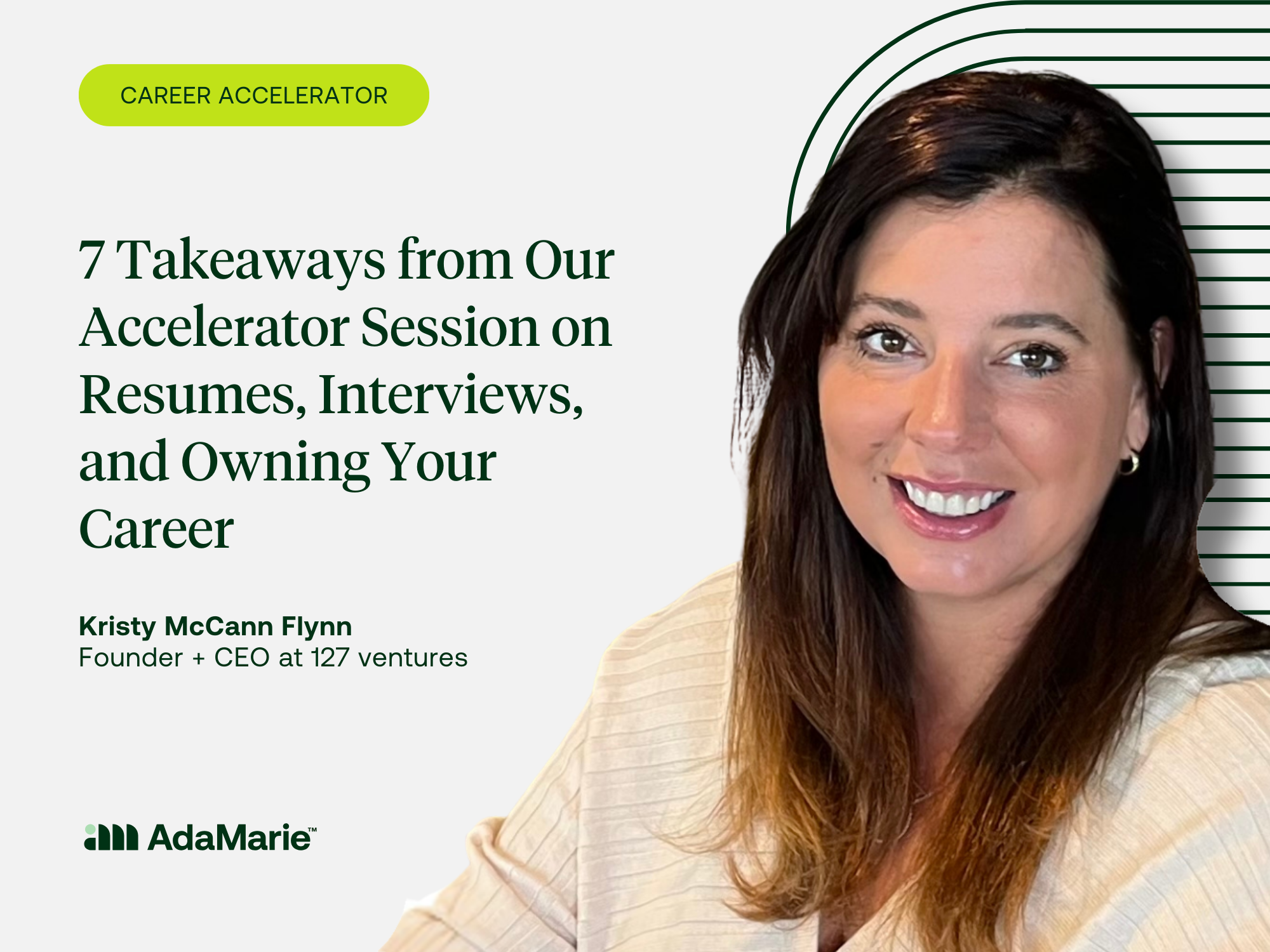
Last night’s Accelerator session with Kristy McCann felt like a much-needed reset.
If you’ve been feeling anxious about resumes, unsure how to talk about your experience, or stuck in the spiral of applying for jobs without hearing back, this conversation offered something better than generic advice. It gave members a sharper way to think about their skills, their stories, and the value they bring.
Kristy, a strategic HR leader and founder who has read thousands of resumes and conducted thousands of interviews, joined the AdaMarie community for a practical and honest conversation on resumes, interviews, and career ownership.
Here are 7 takeaways that stood out.
1. Your career is yours to own
Kristy opened with a reminder that set the tone for the entire session: own your career.
Your career will keep evolving. The path you start on may not be the one you stay on. You may discover new interests, outgrow certain roles, or pivot entirely. That is normal.
The point is not to wait for someone else to map things out for you. The point is to build the skill of understanding your own value and learning how to communicate it clearly over time.
2. Your resume is not an obituary
One of Kristy’s strongest points was that too many resumes read like a historical record of tasks instead of a clear picture of capability. A resume should not just list what you were responsible for. It should show what you did, how big it was, and what happened because of it.
In other words: your resume should tell a story.
Instead of writing bullets that sound like job descriptions, focus on impact. What changed? What improved? What value did your work create?
3. Every bullet should point to value
Kristy kept coming back to one question: How did this add value?
That value might look like saving time, improving a process, reducing risk, supporting patients, helping a team move faster, or contributing to revenue. Even if you do not have perfect access to company-wide numbers, you can still describe outcomes and make thoughtful estimates based on your role.
4. Small things still count
This was a big one for the room but “small” things matter. Community service matters. Paid and unpaid work matter. Side projects matter. Hobbies can matter too, if they reveal something about how you think, solve problems, or create value.
The point is not whether the experience came with a prestigious title. The point is whether it shows initiative, outcomes, creativity, or skill.
5. Stop downplaying your work
Kristy gave one of the clearest reminders of the night: stop using language that shrinks your contribution.
Words like supported, assisted, and helped often flatten the real work you did. Her advice was to lead with stronger ownership language wherever it is accurate.
If you did the work, claim it. That shift matters on resumes, but it also matters in interviews. The language you use on paper shapes the way you speak about yourself out loud.
6. Interviews are a two-way evaluation
Another standout moment was Kristy’s reminder that interviews are not interrogations. They are conversations.
Instead of entering an interview asking only, Will they pick me? she encouraged members to also ask, Is this the right fit for me?
7. If opportunities are not showing up yet, keep building anyway
One of the most encouraging parts of the session came when Kristy addressed what to do if interviews are not coming.
Her answer was direct: make yourself useful.
Volunteer. Build something. Help in your community. Start a project. Create a website. Monetize a hobby. Share what you know on LinkedIn. Keep developing evidence of your skills instead of waiting passively for someone to notice you.
That advice felt especially important because it moved the conversation away from helplessness and back toward action.
What made this session so powerful was that it did not just focus on resumes and interviews as technical tasks. It treated them as extensions of something deeper: how you see yourself, how you communicate your value, and how you take ownership of your path.
Kristy’s message was clear: you do not need to wait until your experience looks more impressive to start telling a stronger story. You can start with what you have right now.
This recap only captures part of the conversation. AdaMarie members can watch the full replay inside the APN to hear Kristy’s full advice on resume strategy, interview mindset, LinkedIn visibility, and career ownership.
And if you are working on your resume or preparing for interviews, this is definitely one to watch.
