
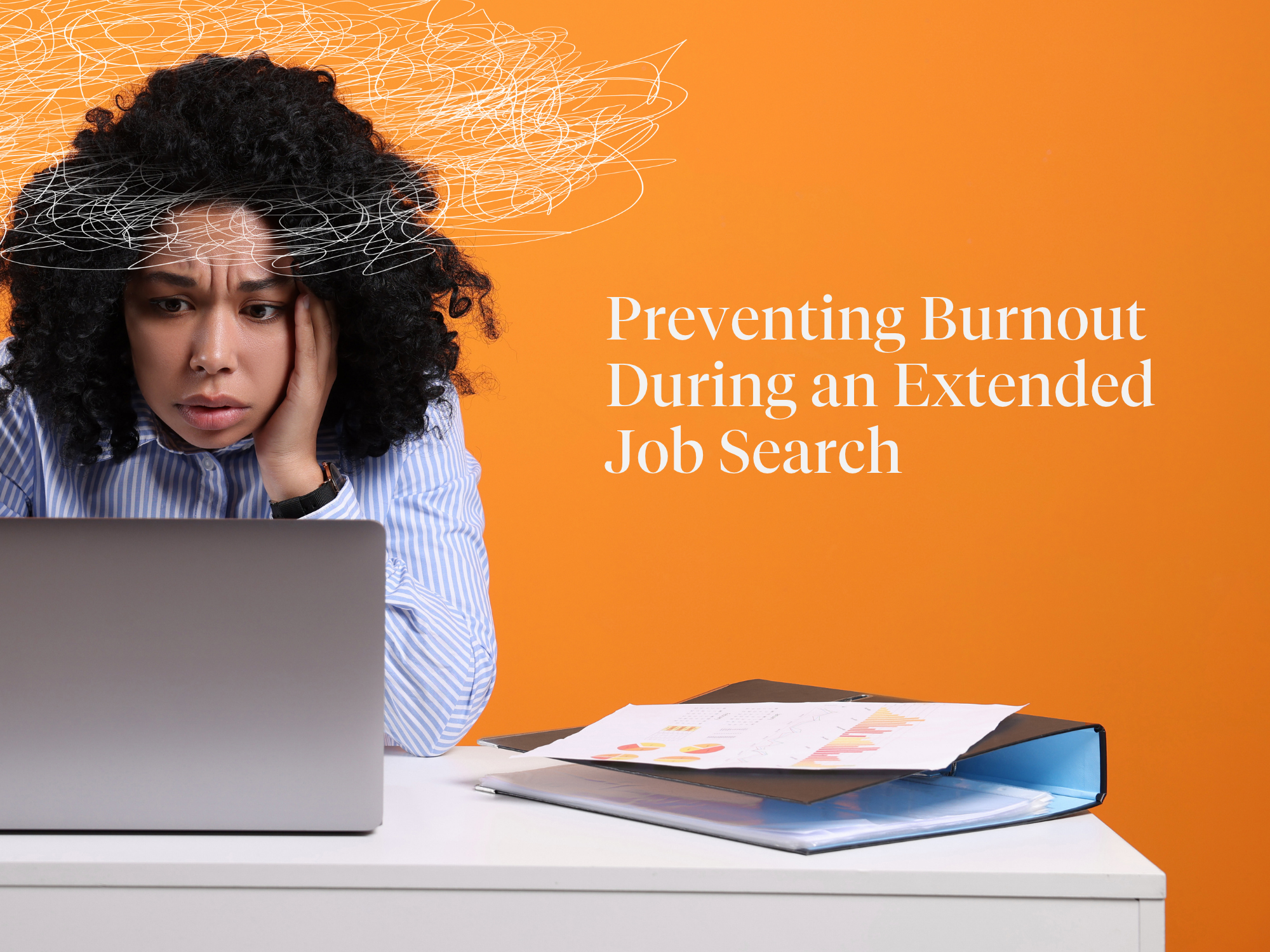
An extended job search is one of the most draining things a career can ask of you. The work is constant and the finish line keeps moving. Months in, it stops feeling like a search and starts feeling like a verdict on your worth, but it’s not. A long search says a great deal about a hard market and very little about you.
So, remember, burnout during a search is not a sign that you are doing it wrong. You are just doing a lot, for a long time, without much to show for it yet. The goal is to protect your energy so you are still standing, and still yourself, when the right opportunity arrives.
Here are five ways to do that.
Give the search a schedule. A job search will take all the time you give it, including the hours you need for rest. Set a start and a stop. Decide which days and hours are for applications, outreach, and interview prep, then close the laptop when that window ends. Treating the search like a role, with boundaries, keeps it from quietly taking over your whole life. You will do better work in four focused hours than in twelve anxious ones.
Count what you can control. You cannot control who calls you back, but you can control how many strong applications you send, how many people you reach out to, and how well you prepare for each conversation. Track those inputs and let them be the scoreboard. When you measure effort instead of outcomes, you get to win on the days the market stays quiet, and those small wins are what keep you going.
Keep an identity outside the search. When the search becomes your whole life, every rejection feels like a rejection of you. Protect one thing that has nothing to do with work. Keep running, keep painting, keep showing up for the people and hobbies that remind you who you are. That life outside the search is the thing that keeps a hard season from swallowing your sense of self.
Build a record of your wins. A long search is very good at making you forget what you are good at. Fight back with evidence. Keep a running list of your accomplishments, the problems you have solved, and the kind words people have said about your work. Read it before interviews and on the hard days. Confidence is easier to hold when you have proof in front of you instead of doubt in your head.
Search alongside people, not alone. Isolation makes everything heavier. The people who understand what you are going through, other job seekers, mentors, and a community that has been there, can offer leads, feedback, and the relief of not carrying it by yourself. You do not have to do this alone, and the search goes better when you don’t.
The fact is that a long job search is hard, but being tired does not mean you are failing. So, pace yourself, protect what matters, and stay close to people who have your back.
The right role is on the way.
