
What “Ready” Looks Like to Employers
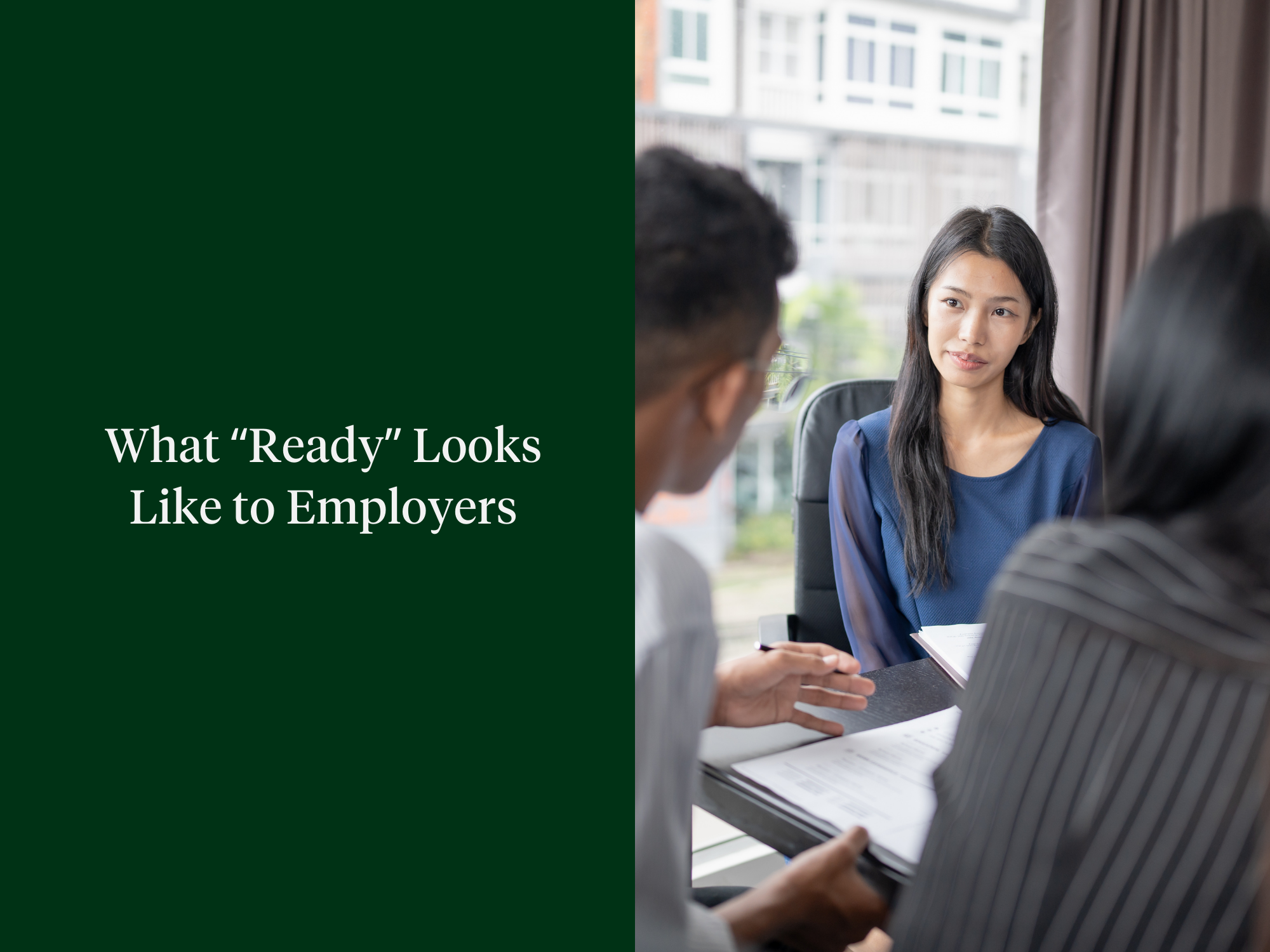
Many early-career professionals spend a lot of time wondering if they’re “ready.”
Ready for the job.
Ready for the promotion.
Ready for the opportunity that feels just a little bigger than their current experience.
It’s a reasonable question. But the way employers define readiness is often very different from how we imagine it.
A common assumption is that being ready means knowing everything you need before you start. That you’ve mastered every tool, answered every question, and closed every gap in your skillset. In reality, very few professionals arrive at a role fully formed.
Most employers aren’t looking for perfection. They’re looking for signals that someone can learn, collaborate, and grow into the work.
One of the strongest signals of readiness is curiosity.
Employers pay attention to people who ask thoughtful questions, who take the time to understand how things work, and who show genuine interest in learning beyond what’s immediately required. Curiosity tells a team that you won’t stall when you encounter something unfamiliar. You’ll investigate it.
Another signal is follow-through.
Early in your career, people aren’t expecting you to have every answer. What they do notice is whether you complete what you say you will. When someone consistently delivers on commitments, even small ones, it builds trust.
Over time, trust becomes the foundation for bigger responsibilities.
Employers also look for communication.
Being ready isn’t just about doing the work. It’s about helping others understand the work. Professionals who share updates, ask for clarification when needed, and explain their thinking clearly make collaboration easier for everyone involved. Teams function better when people can see what’s happening and why.
Another important signal is ownership.
Ownership doesn’t mean working alone or taking on everything yourself. It means caring about the outcome of what you’re responsible for. When challenges arise, people who take ownership focus on solving the problem rather than avoiding it. They stay engaged until the work moves forward.
There’s also something less tangible but equally important: adaptability.
Most workplaces move quickly. Priorities shift, new tools appear, and projects evolve. Employers value professionals who can adjust when things change instead of becoming stuck when the original plan no longer fits.
When you put these signals together, readiness starts to look different.
It looks like someone who shows up prepared, stays curious, communicates clearly, and follows through on what they commit to. It looks like someone who is willing to learn in public, ask for help when needed, and continue improving along the way.
For early-career professionals especially, readiness is less about proving you already know the job and more about demonstrating that you can grow into it.
If you’re waiting for the moment when you feel completely ready before stepping forward, that moment may never arrive. Most careers grow because someone decided to try, learn, and figure things out along the way.
And more often than not, that willingness to grow is exactly what employers are looking for.
