
10 Questions Answered About Visibility for Rising STEM Professionals
Early in STEM careers, many professionals earn a reputation for being dependable, capable, and easy to work with. And yet, visibility doesn’t always follow.
Being reliable quietly turns into being overlooked. Strong contributors get looped in late, trusted with execution but not invited into decision-making, or seen as “solid” rather than strategic. Over time, that invisibility can stall growth, even when performance is high, especially for women and people of color.
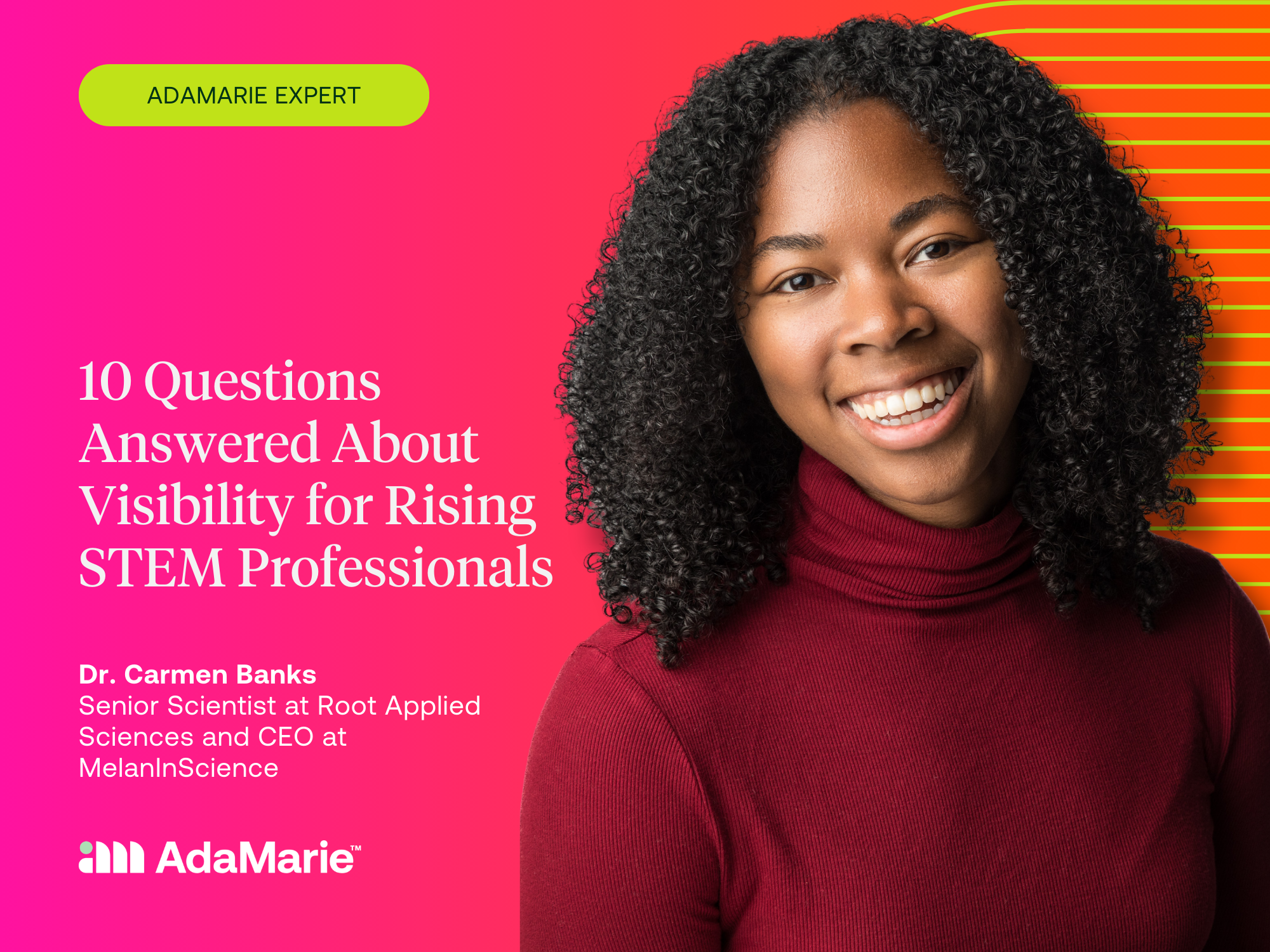
In this Q+A, Dr. Carmen Banks reflects on what visibility actually looks like in STEM environments, especially for rising professionals navigating unspoken norms and expectations that aren’t always made explicit. Rather than focusing on self-promotion, this conversation explores how work becomes legible, trusted, and valued, and how to navigate visibility without overextending.
When you think about visibility in STEM, what does it actually mean to you?
Visibility means being valued not just for the tangible contributions you make, but also for the intangible qualities you bring to a team. It’s about being recognized as an indispensable part of the team whose work and presence are both seen and appreciated.
How is it different from recognition, self-promotion, or “being noticed”?
Visibility isn’t just about being noticed or promoting yourself. It’s about being consistently recognized for the depth and impact of your contributions. Recognition can be fleeting and self-promotion can be superficial, but true visibility is about being known for the value you consistently bring.
What patterns do you notice among talented people whose work isn’t being fully seen or valued?
Talented people whose work isn’t fully seen often focus solely on producing excellent work without communicating its impact. They might underestimate the importance of building relationships or sharing their insights, which can lead to their contributions being overlooked.
Are there common misconceptions about how visibility works early in a career?
One common misconception is that visibility comes naturally if you just work hard enough. In reality, visibility often requires deliberate effort in communicating your progress, building a network, and aligning your work with broader goals.
What role do systems, communication norms, or organizational culture play here?
Systems and culture shape who gets heard and whose work gets highlighted. If communication norms favor certain groups or styles, it can create barriers for others. Organizational culture can either amplify diverse voices or suppress them, so being aware of these dynamics is crucial.
Are there signals early-career professionals tend to underestimate or overlook?
Early-career professionals often overlook the importance of sharing their wins and seeking feedback. They may assume that good work speaks for itself, but it often needs to be communicated strategically.
What are a few practices that help people be seen as thoughtful, strategic contributors without overextending themselves? OR How can someone increase visibility while still protecting their energy and boundaries?
Regularly updating your team on progress, volunteering for cross-functional initiatives, and ensuring your contributions align with the organization’s goals can boost visibility. It’s also important to set boundaries and communicate them clearly, so you’re seen as a reliable and strategic contributor without burning out.
Was there a moment in your own career when visibility became clearer to you, either because something worked or because something didn’t? What did that experience teach you?
A turning point for me was realizing that my contributions were amplified when I actively communicated my achievements and aligned them with team goals. Having a good manager who championed my work made a significant difference, but I also learned not to be over-reliant on external validation.
Validation can look different for different people and doesn't always come as verbal praise. It’s crucial to recognize and internalize your own impact.
For someone early in their career who feels “reliable but invisible,” What’s one shift in thinking or behavior that could make a meaningful difference?What would you encourage them to try before assuming they’re doing something wrong?
One powerful shift is to start proactively sharing your work and insights with your team and leadership. Position yourself as someone who not only delivers results but also connects the dots for others.
Show how your contributions fit into the bigger picture. This can help others see your value more clearly and shift your reputation from "reliable" to "indispensable.
What do you wish more people talked about when it comes to visibility in STEM? Is there a part of this conversation that feels under-discussed or misunderstood?
I wish more people discussed the systemic barriers to visibility, especially for underrepresented groups. There’s a misconception that visibility is solely an individual effort, when in reality, organizational culture and systemic biases play huge roles.
We need to talk more about creating inclusive environments that amplify diverse voices and make visibility equitable.
About Dr. Carmen Banks
2026 AdaMarie Expert Dr. Carmen Banks is a Senior Scientist at Root Applied Sciences and Founder & CEO of MelanInScience, a platform dedicated to increasing visibility, representation, and opportunity for Black scientists. With expertise spanning scientific research, career development, and community leadership, she works at the intersection of science, advocacy, and professional growth, helping early-career professionals navigate visibility, advancement, and impact in STEM.
