
Five Ways to Advocate for Other Women at Work
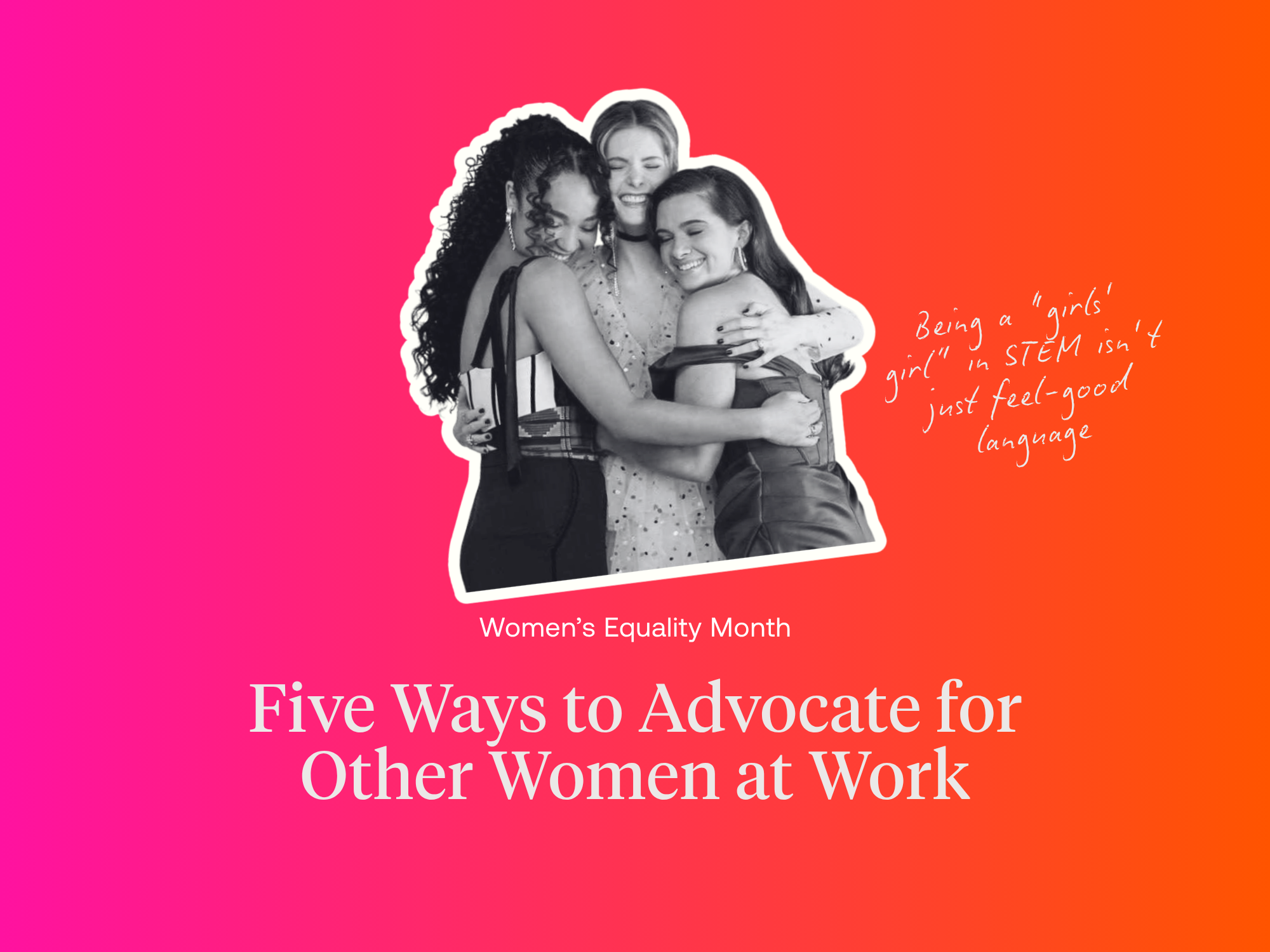
Women’s Equality Month: Equality is not just something we wait for. It is something we build for each other, in small and consequential ways, every single day.
The conversation about women in STEM often centers on individual advancement: how to get ahead, get promoted, get seen. And that matters. But there is another part of the story that gets less attention and carries just as much weight: how we show up for each other.
Progress does not happen in isolation. The women who came before us opened doors by advocating for the women coming behind them. And the workplaces that actually become more equitable are the ones where people use whatever influence they have — however much or little — to lift others as they climb.
You do not need to be a manager or an executive to advocate for other women. You just need to be paying attention and willing to act.
Here are five ways to start.
1. Amplify, do not just agree
One of the most well-documented dynamics in mixed-gender workplaces is that women's ideas are more likely to be overlooked in meetings and more likely to be credited to someone else when they are picked up.
Amplification is a simple, powerful counter to this. When a woman shares an idea, name it and credit her directly. "I want to build on what Maya said" or "Going back to Priya's point" does two things at once. It reinforces the idea and it makes sure the credit stays where it belongs.
You do not need authority to amplify. You just need to be listening and willing to say a name out loud. It is one of the smallest actions with the biggest impact.
2. Share access, not just encouragement
Encouragement is lovely. But access is what actually changes trajectories.
If you are in a room another woman should be in, ask if you can bring her. If you hear about an opportunity, a fellowship, an opening, or an introduction that would serve someone, pass it along. If you have a connection that could help someone, make the introduction rather than waiting to be asked.
The women who accelerate the fastest are often the ones someone chose to bring along. Be that someone when you can. Access is one of the most valuable things you can share and one of the most commonly hoarded.
3. Speak up in the moments that matter
Advocacy is easy when it costs nothing. It matters most when it costs something: when speaking up is slightly uncomfortable, mildly risky, or socially awkward.
When you notice a woman being talked over, interrupted, overlooked, or unfairly criticized, saying something in the moment is one of the most meaningful forms of advocacy there is. It does not have to be dramatic. "I would love to hear her finish" or "I think we cut Sarah off" is often enough to shift the dynamic.
The discomfort of speaking up is real. But it is almost always smaller than the impact and the woman on the other end of that support will remember it far longer than you will remember the awkwardness.
4. Give specific, career-building feedback
Research consistently shows that women receive vaguer feedback than men — more comments on personality and style, fewer on the specific, strategic skills that lead to advancement.
You can counter this directly. When you give a woman feedback, make it concrete and tied to growth. Not "you did great" but "the way you framed the data for that stakeholder was exactly right and it is the kind of skill that gets people promoted." Specific feedback is a gift. It tells someone what to keep doing and where their strengths actually lie.
This matters even more if you are in a position to influence how someone is evaluated. Push for specificity in performance reviews, in hiring conversations, and in the informal assessments that shape who gets opportunities.
5. Celebrate other women loudly and genuinely
There is a scarcity myth that quietly shapes how women relate to each other at work; the idea that there is only room for a few, so another woman's success is a threat to your own.
Reject that entirely. Celebrate other women's wins loudly, specifically, and without reservation. Congratulate them publicly. Name their accomplishments in rooms they are not in. Refuse the subtle competition that scarcity thinking invites and replace it with genuine, vocal support.
Abundance is a choice. And every time you celebrate another woman's success rather than quietly measuring yourself against it, you help build a culture where women rise together instead of alone.
Advocacy is a series of small, deliberate choices to use whatever influence you have on behalf of someone else.
A name spoken in a meeting. An introduction made. A moment of speaking up when it would be easier to stay quiet. None of these require a title. All of them require attention and a little bit of courage. And together they are how workplaces actually change. Not from the top down, but from all of us choosing to show up for each other.
Lift as you climb.
There is room for all of us.
