
What I Wish Someone Had Told Me About Advocating for Myself at Work
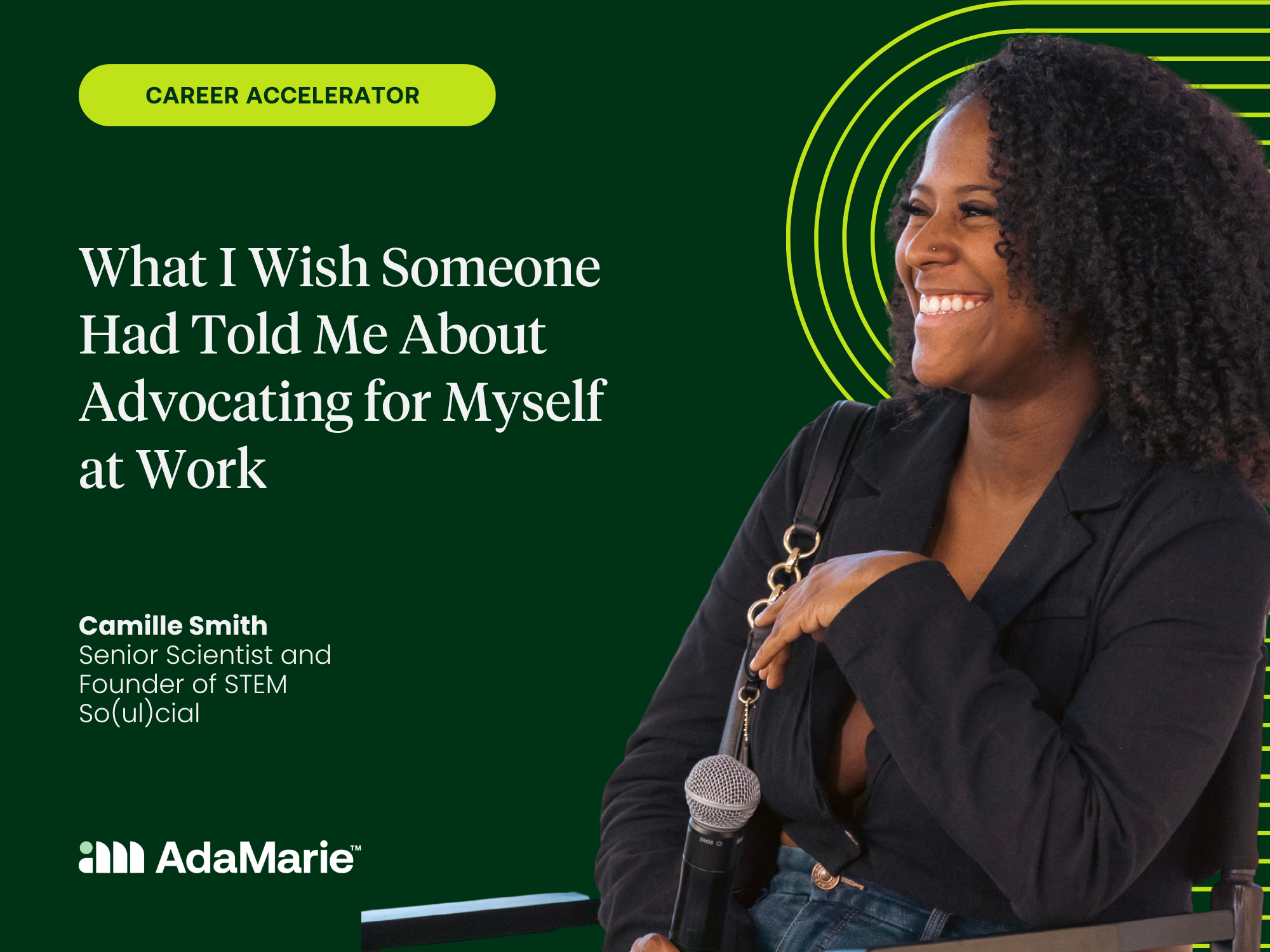
Nobody sat me down early in my career and said, “Camille, you’re going to have to speak up for yourself to get the things you want.”
It was through observation and mentorship I realized this. And I’ve seen plenty of competent and hardworking early-career professionals navigate the same blind spot. We know how to do the work, but we don’t always know how to advocate for ourselves when doing it.
So, consider this the conversation I wish I’d had sooner.
Advocacy starts with clarity.
Before you can ask for what you want, you have to actually know what that is. Not just “more.” What do you want more of? A leadership role? A specific project? A raise? A mentor? The clearer you are internally, the more powerfully you can communicate externally.
Spend time with that question. Write it down.
Your accomplishments need a witness.
Documentation is the number one thing that sets people apart in their careers. Keep a running record of your wins. You want to make recalling all the good you’ve done easy for your peers and your leadership team. Our memories can be unreliable and performance reviews are not the time to rely on your manager's ability to recall what you did in the beginning of the year.
When you have evidence, you walk into conversations with confidence instead of anxiety.
Now, asking is a skill, not a personality trait.
It is something you can get better at over time if you practice. Some of us were raised in environments where asking felt dangerous or presumptuous. That conditioning is real, but in the professional world, asking is expected. You need to ask your manager, HR, leadership team for the things you want in order to get them!
We’ve always heard “closed mouths don’t get fed.” They don’t get fed in corporations either, so learning how to make a clear ask is one of the highest-return investments you can make in your career.
Advocating for yourself shows up in different ways.
Boundaries are advocacy too. In your career there will be a point where you won’t be able to take on another task and still perform at a high level, so saying “I can’t take that on right now without deprioritizing X” is not a weakness. It tells your team you’re operating with intention and that matters for how you’re perceived as a leader and contributor.
None of this requires you to become someone you’re not. The goal isn’t to perform with confidence you don’t feel. It’s to practice the behaviors that, over time, build the real thing.
But here is the good thing, you’re already ahead of the curve because you’re connected to AdaMarie, and we are going to get you set up so self-advocacy becomes second nature!
About Camille Smith
Camille Smith is a chemical engineer, social entrepreneur, and content creator based in Philadelphia. She works as a Senior Upstream Process Development Scientist and is the founder of STEM So(ul)cial, a global third space for aspiring and established Black STEM professionals.
Camille is committed to fostering a supportive space for Black professionals in STEM and provides insight into the complexities of balancing a demanding career with her passion for empowering and connecting individuals within her community anywhere she can.
