
Self-Advocacy: Starter Guide for Early-Career Professionals
Have you heard about self-advocacy? In this blog, we will talk about the importance of self-advocacy and how to effectively advocate for yourself at work, especially if you’re a woman or a person of color.
We'll cover why it matters and how to put it into practice, with concrete examples of knowing your impact and spotting the moments to speak up.
What?
Self-advocacy means a lot of things. We’re going to use this Wikipedia definition: “Self-advocacy is the act of speaking up for oneself and one's interests.”
This means you have to advocate for yourself.
You have to do it. Whether or not others are also advocating for you.
You have to advocate for yourself. Whether or not you’re also advocating for others.
This isn’t one-and-done. Self-advocacy spans your entire career.
Why?
Why do we have to self-advocate anyway? It’s hard. Plus, there’s a temptation to think work should speak for itself. And some people grew up in backgrounds where self-advocacy was interpreted as boasting or being demanding.
The truth is:
Work will not speak for itself. Trust me, I’ve tried. Just like taxes don’t do themselves.
Even your biggest fan will not notice or remember all your work and impact. Even your future self might not.
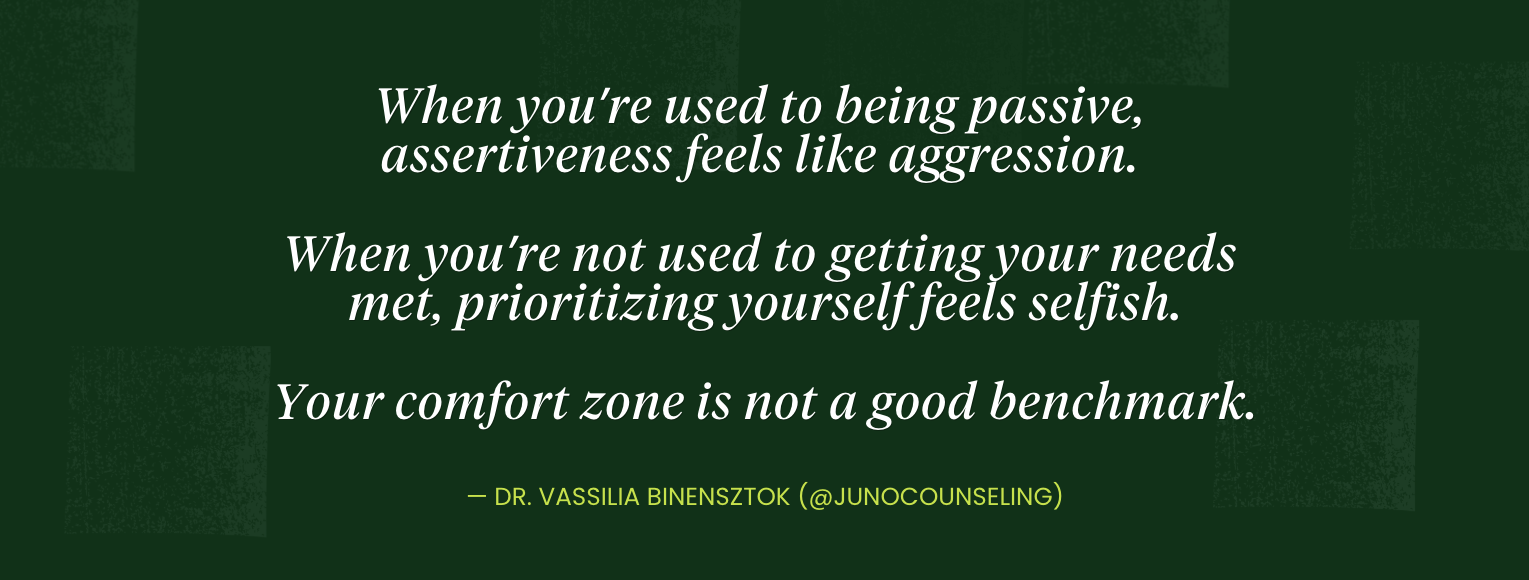
Self-advocacy is not being boastful or demanding. Even though it’s probably going to feel like it.
And it’s so important:
You know the most about your work and impact.
Your own self-advocacy is the foundation for so much of your career life.
Does knowing this make it easy? Goodness no, this I know first-hand. But it can become easier as you put it more into practice.
Now, The How…
You should be sold on the self-advocacy, even if you’re reluctant. So, let’s see how to make it work in action. This is a short blog, so we’re only going to scratch the surface.
Some of the things you’ll be advocating for are your day-to-day work interactions, and your career goals.
1. A Quick Note on The Playing Field
Because most of you reading this are women or people of color, I want to acknowledge your reality. Multiple things are true here: The playing field is not level, and you may experience bias. Still, I recommend you not assume bias is the full story, but address it when it shows up.
2. Goal Setting
I’ve shared through AdaMarie content to view the goals as a plan from which you might deviate. Still, it’s helpful to know what your current goals are.
3. The Impact Of Your Work
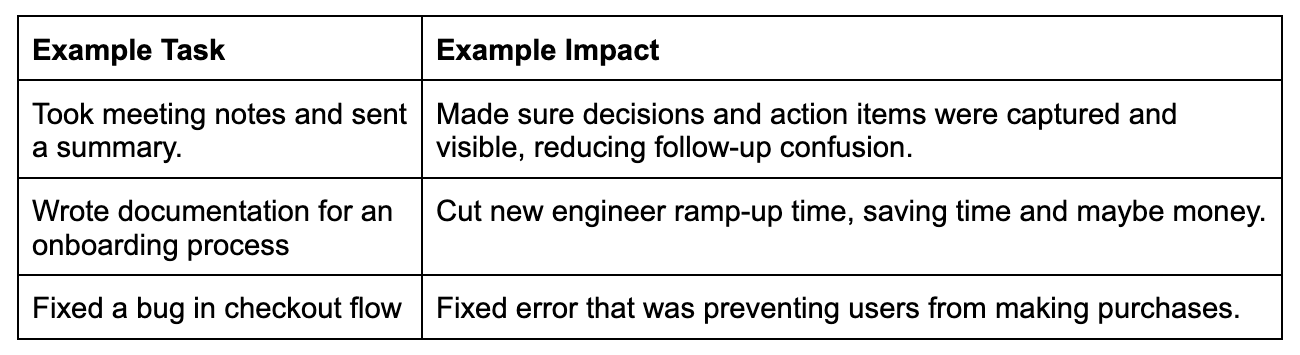
There’s a reason behind the work you do, even if it doesn’t seem like it. Learn to recognize and speak about the impact. Start to build that muscle now - many of us wish we had started earlier.
4. Recognize Advocacy Moments At Work
Moments to self-advocate are aplenty at work. Some of them include receiving or giving feedback, meetings with your manager, code reviews & pull requests, team meetings, company meetings, performance reviews, or advocating for increases in scope, title or pay.
Though these moments are different, the concepts are the same:
If prep is warranted, you come prepared.
You speak up about your work or your interactions.
You connect your work to the impact.
Through all this, you keep building the self-advocacy muscle, and it does get easier.
5. Seek External Support
It’s also important to get external support. This can be in the form of mentors, sponsors, allies, coaches, etc. Being part of AdaMarie, you already are getting some of that. Seek support from people across different identities, not just those who share yours.
Want more on self-advocacy?
There are many articles on this topic, and it also appears in many of the speeches I give. Use this blog as just your starting point.
Also, I highly recommend this Self-Advocacy book: shailvi.com/self-advocacy-book.html. I read it a few years ago and wish it had been sooner. Note: I am connected to the author, but that doesn’t influence what I read or recommend.
Thinking of your next opportunity, how will you self-advocate?
About Boomie Odumade
Boomie Odumade is a software engineering leader, founder, and fractional VP of Engineering and CTO at TechBees. She brings a unique perspective shaped by both deep technical expertise and leadership experience across the tech industry.
Her path into technology began with a degree in mechanical engineering, followed by a master’s in computer science and an MBA from Wharton — and since then she’s worked across engineering and leadership roles while helping teams and individuals navigate growth in the tech space. Alongside her work in industry, Boomie is deeply committed to mentorship and supporting the next generation of STEM professionals through speaking, writing, and youth-focused organizations.
