
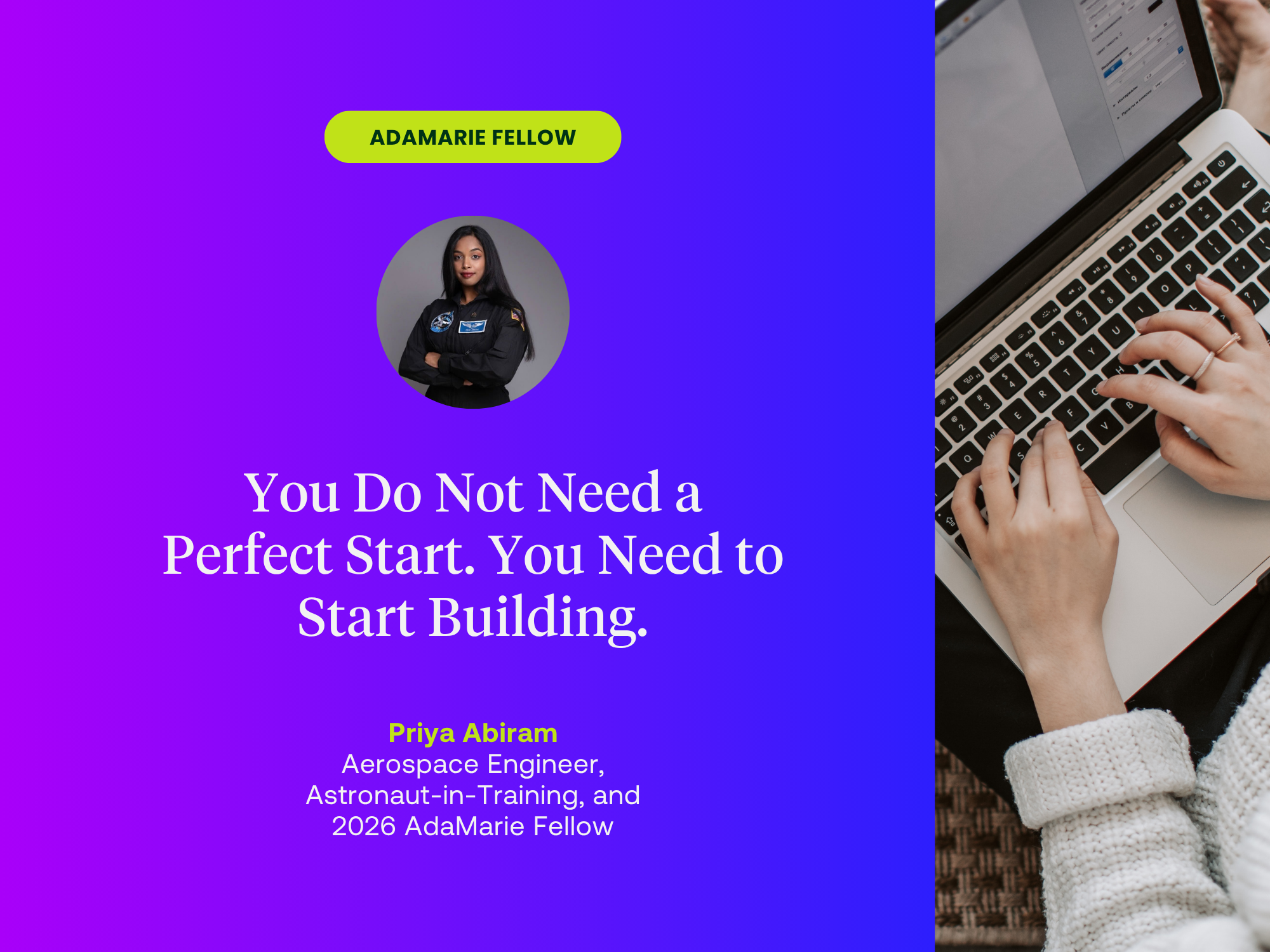
You Do Not Need a Perfect Start. You Need to Start Building.
Breaking into STEM can feel impossible when you are starting from nothing. It feels impossible to apply for your first internship and see that they want prior experience, because how are you supposed to get experience if no one gives you the first chance? I know that feeling well.
If you do not have experience yet, create it.
Build a drone. Build a rocket. Build a race car. Build an engine. Join a robotics team. Start a technical side project at home. Enter innovation competitions and pitch competitions. Those are some of the best ways to turn curiosity into something real you can actually talk about in interviews. Personal projects show initiative, problem solving, and grit. They make you memorable.
Research Is More Accessible Than You Think
Research is another huge one. Reach out to professors, graduate students, and labs, even if you think you are underqualified. A lot of students assume research is only for people with perfect resumes. It is not. Often, it starts with one thoughtful email, one conversation, one person willing to give you a shot. The same goes for internships. Apply, yes. But do not only apply online and disappear into the void.
Use LinkedIn Like You Mean It
Use LinkedIn strategically. Connect with people working in the roles and companies you want. Do not just spam “hi.” Ask thoughtful questions. Mention something specific about their work. Show that you are serious. The best outreach feels human, curious, and intentional.
And when it comes to conferences, stop spending all your time talking only to recruiters. Meet managers. Meet engineers. Meet technical leads. A manager who believes in you can move things in a way HR often cannot.
Scholarships Are Just as Important as Internships
For students worried about tuition, scholarships matter just as much as internships. Reuse and refine your college application essays. Do not only apply to the giant general scholarships everyone is chasing. Look for the ones tailored to your background, race, gender, interests, geography, or life story. Those are often less crowded and more aligned to who you are.
Go Deep on a Few Things, Not Shallow on Everything
Do not waste time doing 100 volunteer hours just because it “looks good” on a resume. Focus on experiences that actually energize you, things you genuinely care about, and opportunities that will move you forward. You do not have to do a million different things. It is much better to go deeper in a few things, get really good at them, and find real passion in the process.
You Do Not Have to Start Perfect
I started my first semester of engineering at Cornell with a 2.5 GPA. I was not born naturally good at math. I was not the person who walked in knowing everything. But I cared deeply, and I practiced every day. Since then, I have made the Dean’s List for several semesters and graduated while working on astronaut life support systems for a private space station.
So if you are feeling behind right now, please do not count yourself out too early. You do not need to start perfect. You need to start building, keep practicing, and care enough to keep going when it is hard.
Priya Abiram is an aerospace engineer, pilot, and astronaut-in-training whose work spans human systems engineering, spacecraft design, bioastronautics research, and women’s health innovation. A 2026 AdaMarie Fellow, she holds both a B.S. and M.Eng. in Aerospace Engineering from Cornell University and has contributed to projects and research with organizations including NASA, Blue Origin, Boeing, VAST, and Inversion Space.
Priya is passionate about designing systems that improve human performance in extreme environments while expanding access, representation, and possibility within STEM.
